
About Us
Contact Info
- F26, Marina View Residence, Marsa Alam, Egypt
- +20 100 3777 202
- sherif@wanderlusteg.com
Luxor temple
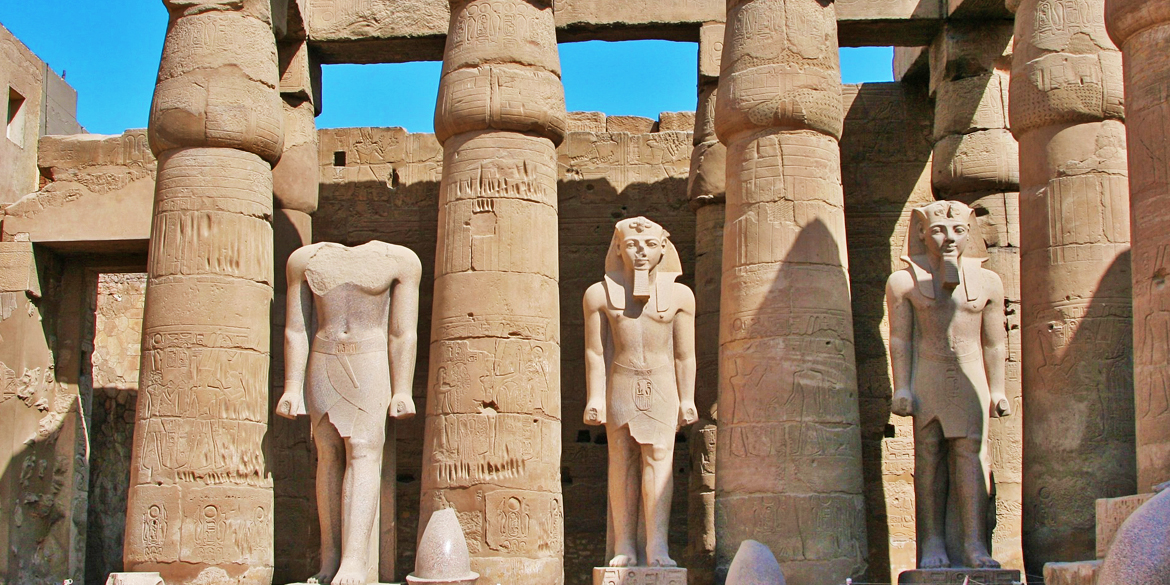
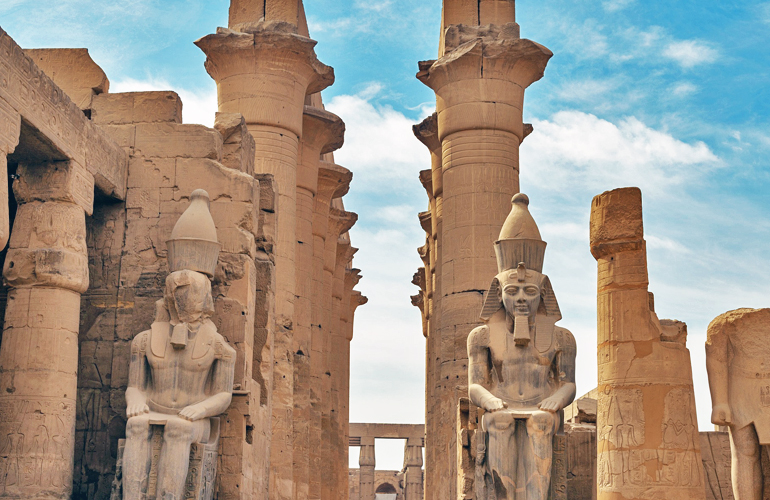
Luxor temple is not dedicated to a cult god or a deified version of the pharaoh in death. Instead, Luxor temple is dedicated to the rejuvenation of kingship; it may have been where many of the pharaohs of Egypt were crowned in reality or conceptually (as in the case of Alexander the Great, who claimed he was crowned at Luxor but may never have traveled south of Memphis, near modern Cairo).
Luxor temple, unlike most other ancient Egyptian temples, is not laid out on an east‑west but is oriented towards Karnak. This is because Luxor Temple was the main venue for one the most important of ancient Egyptian religious celebrations. The temple has been in almost continuous use as a place of worship right up to the present day. During the Christian era, the temple’s hypostyle hall was converted into a Christian church, and the remains of another Coptic church can be seen to the west. Then for hundreds of years, the temple was buried beneath the streets and houses of Luxor. Eventually the mosque of Sufi Shaykh Yusuf Abu al-Hajjaj was built over it. This mosque was carefully preserved when the temple was uncovered and forms an integral part of the site today…
- Statues of Ramses II
- Pylon and Obelisk of Ramses II
- Avenue of sphinxes
- Barque Shrine of Theban Triad
- Sun court of Amenhotep III